Stain removal guide
Turmeric & Curry Stain Removal
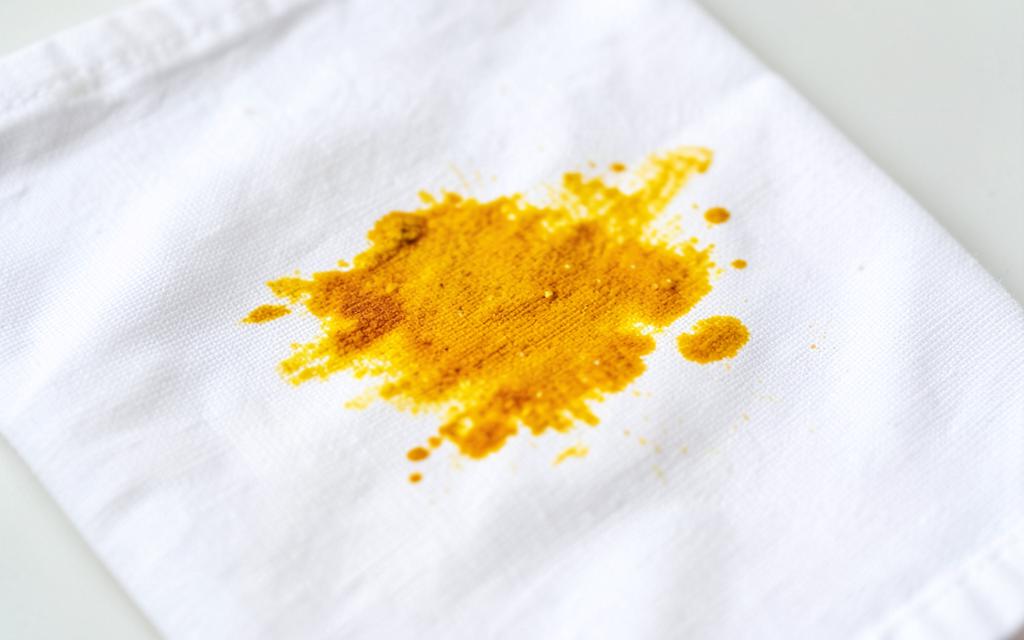
What causes it
Turmeric owes its colour to curcumin, a fat-soluble yellow pigment that bonds quickly to cotton, linen and plastic. Curry sauces make it harder still, because the pigment arrives carried in oil or ghee, so you are dealing with a dye stain and a grease stain at the same time. Curcumin also darkens and sets when it meets heat, so a hot wash or a tumble dry before the colour is gone can lock it in permanently.
How to remove it
- 1Lift any solid sauce off with a spoon, working from the outside in, and blot excess oil with a dry paper towel. Do not rub the pigment deeper into the weave.
- 2Rinse the back of the fabric under cool running water for a minute so the pigment is pushed out the way it came in.
- 3Work a small amount of washing-up liquid into the mark with your fingertips to break down the oil, then rinse again with cool water.
- 4Make a paste of a colour-safe oxygen bleach powder and cool water, or soak the item in an oxygen bleach solution, and leave it for 30 to 60 minutes on white and colourfast fabric. On coloured or delicate fabric use a stain remover made for the fibre instead.
- 5Wash on the warmest cycle the care label allows with your usual detergent, then air-dry only.
- 6If a yellow shadow remains, lay the damp item in direct sunlight for a few hours. Sunlight breaks curcumin down and often clears the last of the tint. Repeat before you ever tumble dry.
On hard surfaces such as worktops, plastic containers and grouting, use a baking soda paste rather than a soak, then rinse. Avoid oxygen bleach on wool, silk, leather and anything vintage or professionally treated, and test any product on a hidden area first.
This is general guidance for turmeric & curry on common fabric. Every stain is different depending on your exact surface and how long it's set — scan yours for a personalized read.
Scan My StainPlease read before you treat anything
This guide provides general information only and is not a substitute for a personalized diagnosis. Always test any method on a hidden area first. Stain Identifier is not responsible for damage resulting from following this guidance. For high-risk materials like leather, suede, or vintage fabric, professional cleaning is strongly recommended.
Read the full Terms